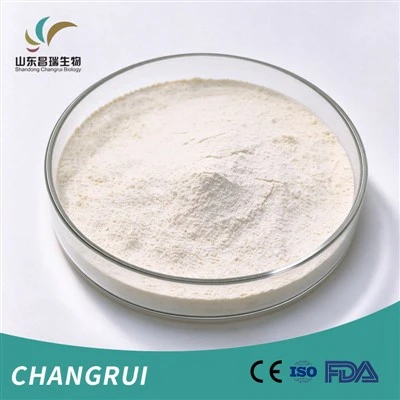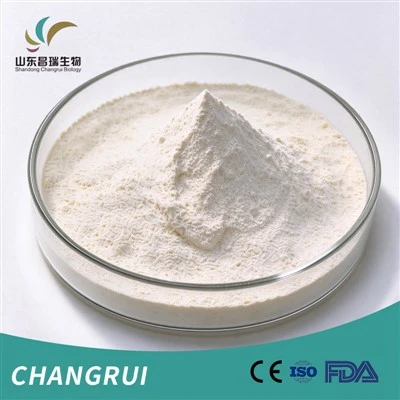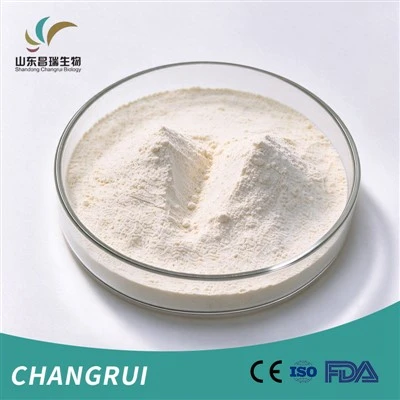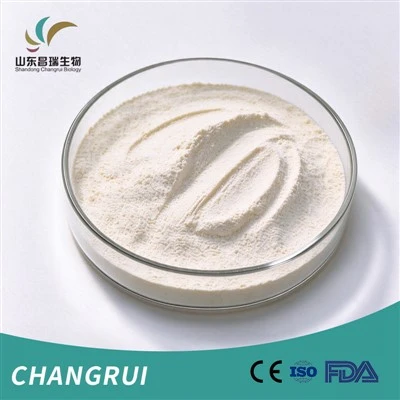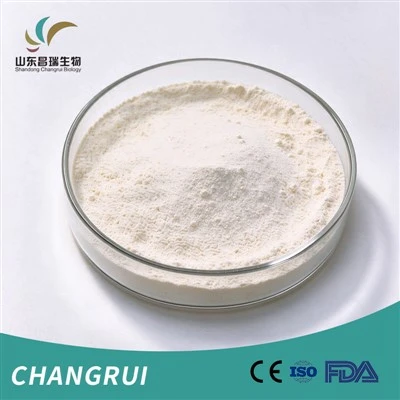
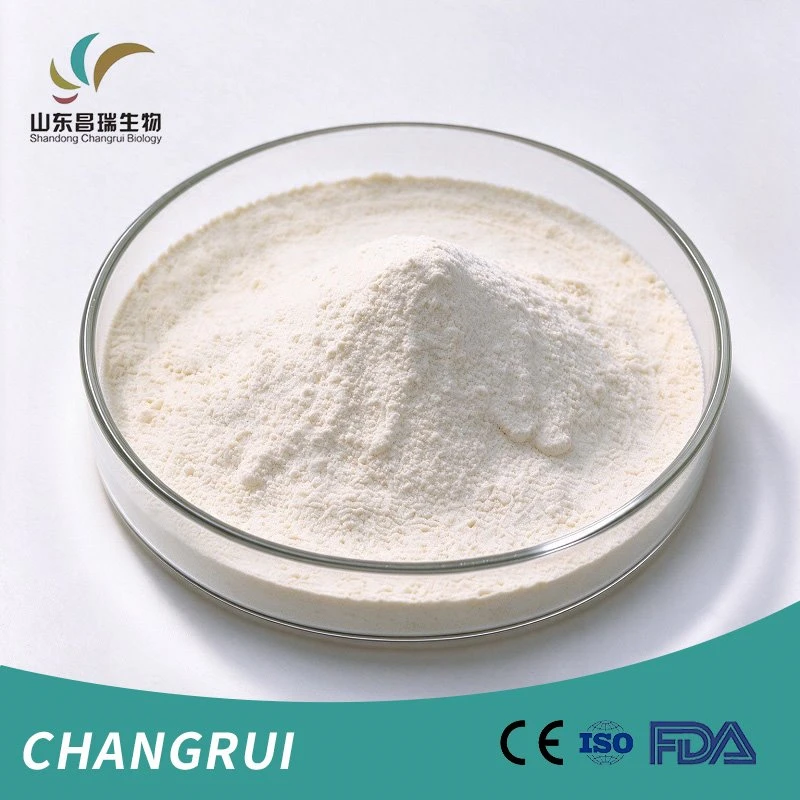
Shandong Changrui Biotech Co., Ltd. is one of the leading manufacturers and suppliers of carboxymethyl chitosan powder in China. Please feel free to wholesale bulk high purity carboxymethyl chitosan powder in stock here from our factory. All our raw materials are with high quality and competitive price. Contact us for pricelist.
Product Introduction
Carboxymethyl Chitosan Powder is a water-soluble amphoteric polysaccharide produced by carboxymethyl modification of chitosan. It acts as a versatile raw material for both pharmaceutical excipient development and medical-device component fabrication. While conventional chitosan dissolves exclusively under acidic environments, this variant maintains stable solubility across neutral-to-alkaline pH conditions. Within pharmaceutical workstreams, it supports pH-triggered targeted payload liberation, solubilisation of poorly-soluble actives, and oral-solid formulation build-out. For biomaterial projects, it can be processed into injectable hydrogels, wound-repair dressings, post-surgical anti-adhesion barrier films and tissue scaffolds, featuring desirable moisturising properties and sound biological compatibility.
Technical Specifications
|
Property |
Specification |
|
Appearance |
Pale yellow to off-white powder |
|
Degree of Carboxymethylation |
80.0% -95% |
|
Moisture |
12.5% max |
|
Ash |
1.0% max |
|
Insoluble Matter |
1.0% max |
|
pH (1% solution) |
6.5-8.0 |
|
Residual Protein |
0.2% max |
|
Arsenic (As) |
1 PPM max |
|
Lead (Pb) |
10 PPM max |
|
Mercury (Hg) |
0.2 PPM max |
|
Cadmium (Cd) |
1 PPM max |
|
Total Plate Count |
1000 CFU/g max |
|
Mold & Yeast |
100 CFU/g max |
|
E. coli |
Negative |
|
Salmonella |
Negative |
|
Staphylococcus aureus |
Negative |
|
Pseudomonas aeruginosa |
Negative |
Health Benefits & Values
Wide pH Water Solubility Expands Liquid Formulation Options
Amphoteric structure delivers stable solubility across neutral to alkaline aqueous systems, removing the acid-dissolving limitation of conventional chitosan.
pH-Responsive Performance Enables Targeted Drug Release
Reversible ionisation responds to surrounding pH changes, supporting smart targeted payload release for colon-targeted and tumour microenvironment-responsive formulations.
Amphoteric Carrier Boosts Dispersion of Poorly Soluble Actives
Dual-charge molecular characteristics improve dispersion of insoluble ingredients, supporting microsphere and nanoparticle colloidal delivery system development.
Multi-Functional Film Forming & Chelating Capability
Provides thickening, moisturising and metal chelating functions, forming flexible protective films for wound care, coating and biomaterial fabrication.
Gentle Biocompatibility With Gradual In-Vivo Degradation
Retains reliable chitosan biosafety and degrades slowly with low immune reaction risk, suitable for oral dosage and tissue-contact medical device projects.
Core Value in Formulation Development
As Pharmaceutical Excipient
01 pH-Responsive Drug Delivery: Leverages carboxyl-group pH-sensitivity to realise targeted payload liberation, applicable for colon-targeted and tumour-microenvironment-responsive formulation concepts.
02 Sustained-Release Microspheres and Nanoparticles: Carboxymethyl Chitosan Powder can be fabricated into micro- and nano-particles for encapsulation and sustained liberation of bioactive actives, protein substances and genetic materials.
03 Solubilization of Poorly Soluble Drugs: Functions as amphoteric carrier to elevate dissolution and dispersion performance for hard-to-solubilise actives.
04 Sustained-Release Matrix Tablets: Acts as hydrophilic matrix constituent to achieve gradual payload liberation via swelling-erosion pathways.
05 Oral Solid Formulations: Acceptable water-solubility plus particle-flow properties suit tablet-pressing and capsule-filling manufacturing workflows.
As Medical Device Material
06 Injectable Hydrogels: Makes use of pH-responsive and self-assembly traits to produce injectable hydrogel constructs for infected-wound repair and soft-tissue filling.
07 Wound Repair Dressings: Processable into powders, sponges, gels, sprays and dressing films for superficial wounds, burn lesions and chronic-ulcer management.
08 Post-Surgical Anti-Adhesion Materials: Gel-state carboxymethyl chitosan forms protective interfacial films between tissue layers and lowers post-operative adhesion occurrence risk.
09 Tissue Engineering Scaffolds: Serves as three-dimensional scaffold substrate; supplies mechanical support for cell attachment as well as proliferation for bone-repair and cartilage-regeneration work.
10 Hemostatic Materials: Rapidly absorbs wound exudate and builds physical protective films for wound-sealing purposes.
End-Application Scenarios
As Pharmaceutical Excipient
01 pH-Responsive Drug Delivery (Core): Applied to colon-targeted and tumour-microenvironment-responsive formulation development.
02 Sustained-Release Microspheres and Nanoparticles: For encapsulation and sustained release of bioactive actives, proteins and genetic-material payloads.
03 Solubilization of Poorly Soluble Drugs: Deployed to boost dissolution behaviour and overall bioavailability of hard-to-solubilise substances.
04 Sustained-Release Matrix Tablets: Functions as hydrophilic matrix material to tune drug-release profiles for matrix-type tablets.
05 Oral Solid Formulations: Used as feedstock for tablet compression and capsule-filling oral-solid product manufacture.
As Medical Device Material
06 Injectable Hydrogels: For infected-wound repair and soft-tissue-filling injectable gel-system projects.
07 Wound Repair Dressings: Raw-material input for powder, sponge, gel, spray and film-type wound-care finished articles.
08 Post-Surgical Anti-Adhesion Materials: Manufacture of anti-adhesive gel products for surgical-incision sites.
09 Tissue Engineering Scaffolds: Scaffold-building material for bone-repair, cartilage-regeneration and oral-tissue-engineering research.
10 Hemostatic Materials: Used for finished articles requiring rapid wound-site exudate absorption and physical wound sealing.
Application Advantages and Market Positioning
Broad-pH Water-Solubility Differentiator
Dissolves within wide pH aqueous ranges, breaking the limitation that conventional chitosan only dissolves under acidic conditions. It ranks among the most stable water-soluble variants within the chitosan derivative family.
Unique pH-Responsive Release Positioning
pH-sensitivity from carboxyl-group ionisation brings targeted-release capacity. This sets it clearly apart from high-density chitosan (bulk-density/flow-focused), chitosan hydrochloride (strong-cation/absorption-boosting) and low-molecular-weight chitosan (mucoadhesion for liquid systems).
Formulation Benefits for Pharmaceutical Projects
Carboxymethyl Chitosan Powder suited for pH-triggered delivery designs, sustained-release particle fabrication and poorly-soluble-substance solubilisation; its amphoteric character helps lift payload dissolution performance.
Multi-Purpose Medical-Device Development Value
Processable into hydrogels, sponges, gel-sprays and wound-contact films. It supports wound-repair, post-operative anti-adhesion and tissue-scaffold-related device-development workflows.
FAQ (Technical Q&A)
As Pharmaceutical Excipient
Q1: What is the isoelectric point of Carboxymethyl Chitosan?
A: The isoelectric point varies with degree of carboxymethylation. Typically around pH 4–5. At pH above this, the polymer carries a net negative charge; below it, a net positive charge.
Q2: How does its charge behavior affect drug loading?
A: At neutral to alkaline pH, it carries negative charge and can bind cationic drugs. At acidic pH, it becomes positive and can bind anionic drugs. This dual behavior enables versatile loading strategies.
Q3: Why is it suitable for colon-targeted delivery?
A: It remains insoluble in the acidic stomach but dissolves at neutral to alkaline pH in the colon, releasing the payload specifically at the target site.
Q4: How does it interact with metal ions in formulations?
A: Carboxymethyl groups chelate metal ions such as calcium, zinc, and iron. This can affect stability of metal-containing actives and should be tested.
Q5: Can it improve the dissolution of poorly soluble drugs?
A: Yes. As an amphoteric polymer, it improves wetting and dispersion of hydrophobic drugs, increasing dissolution rate.
Q6: What is the typical degree of carboxymethylation for pharmaceutical use?
A: ≥80% is standard. Higher substitution increases water solubility and charge density.
Q7: How does it behave in oral liquid formulations?
A: It forms clear, slightly viscous solutions. pH should be maintained between 6 and 8 to avoid precipitation.
Q8: What is the effect of pH on gelation?
A: Gelation can be triggered by pH shift or ionic cross-linking. Lower pH favors ionic cross-linking with cations; higher pH favors covalent cross-linking.
As Medical Device Material
Q9: What is the mechanism of post-surgical adhesion prevention?
A: It forms a hydrated gel barrier that separates tissue layers during healing, preventing fibrin bridges that cause adhesions.
Q10: How does it degrade in vivo?
A: Degradation is primarily enzymatic and hydrolytic. Rate depends on deacetylation degree, molecular weight, and cross-linking. Degradation products are oligosaccharides and glucosamine.
Q11: Can Carboxymethyl Chitosan Powder be used in wound dressings for infected wounds?
A: Yes. Its pH-responsive solubility allows it to form a gel at wound pH, and its metal-chelating property may inhibit bacterial growth.
Q12: How does it compare to hyaluronic acid in tissue engineering?
A: Both are biocompatible. Carboxymethyl chitosan is more stable and cost-effective, with tunable degradation and charge properties.
Hot Tags: carboxymethyl chitosan powder, China carboxymethyl chitosan powder manufacturers, suppliers, factory