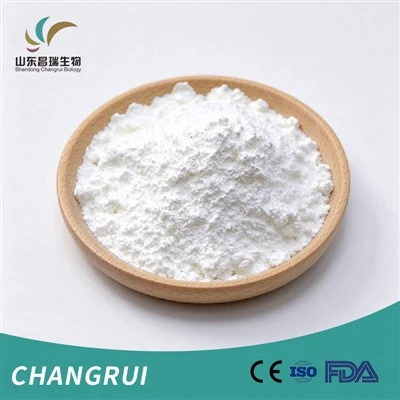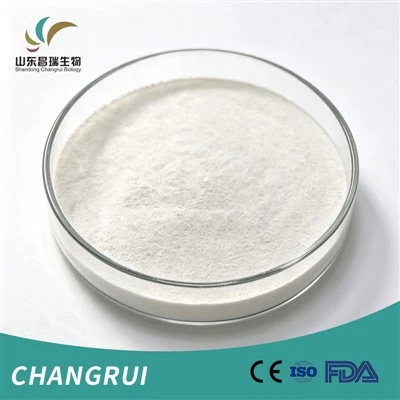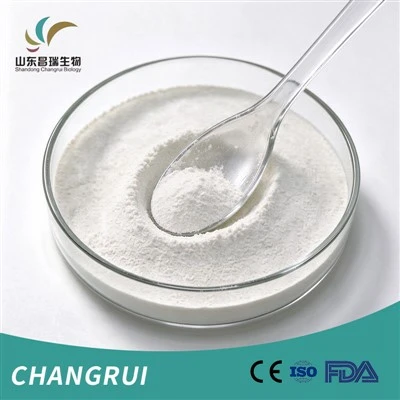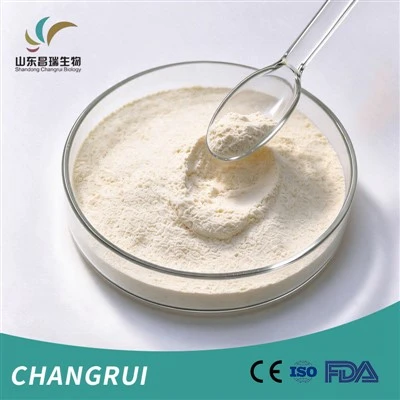
Shandong Changrui Biotech Co., Ltd. is one of the leading manufacturers and suppliers of medical grade chitosan in China. Please feel free to wholesale bulk high purity medical grade chitosan in stock here from our factory. All our raw materials are with high quality and competitive price. Contact us for pricelist.
Product Introduction
Compared with pharmaceutical-grade chitosan, Medical Grade Chitosan enforces stricter standards for biocompatibility, endotoxin and microbial-limit control. It is purpose-built for wound dressings, absorbable hemostatic materials, tissue-engineering scaffolds and absorbable sutures. It features three core attributes: natural hemostatic potential, broad-spectrum antimicrobial performance and in-vivo absorbable degradation. This natural functional biomaterial integrates hemostatic, antimicrobial and wound-healing properties, enabling medical-device manufacturers to develop safer and higher-performance wound-care and implant-related finished products.
Technical Specifications
|
Property |
Specification |
|
Appearance |
Off-white to white powder |
|
Deacetylation Degree |
90% min |
|
Viscosity (1% acetic acid, 25°C) |
20-500 mPa·s |
|
Moisture |
10.0% max |
|
Ash |
1.0% max |
|
Insoluble Matter |
1.0% max |
|
pH (1% solution) |
7.0-9.0 |
|
Residual Protein |
0.2% max |
|
Endotoxin |
20 EU/g max |
|
Heavy Metals (as Pb) |
10 PPM max |
|
Arsenic (As) |
1 PPM max |
|
Lead (Pb) |
0.5 PPM max |
|
Mercury (Hg) |
0.1 PPM max |
|
Cadmium (Cd) |
1 PPM max |
|
Total Plate Count |
100 CFU/g max |
|
Mold & Yeast |
10 CFU/g max |
|
E. coli |
Negative |
|
Salmonella |
Negative |
|
Staphylococcus aureus |
Negative |
|
Pseudomonas aeruginosa |
Negative |
Health Benefits & Values
Rapid Cationic Hemostatic Performance
Features positive charged molecular structure to rapidly adsorb blood cells and platelets, achieving fast wound sealing and efficient hemostasis for medical wound treatment.
Broad-Spectrum Antimicrobial Protection
Destroys microbial membrane integrity and inhibits pathogen activity, effectively suppressing common wound bacteria and reducing medical infection risks.
Promotes Tissue Repair & Regeneration
Reference temperature environment:30℃
Operating ambient temperature:(average daily temperature ≤ +35℃) -35~+70c
Please pay attention to safety when using,wait until the power is turned on to warm up before operation
Adjustable Biodegradation Performance
Enzyme-responsive degradable structure with tunable degradation speed via molecular weight and deacetylation adjustment, matching diverse tissue healing cycles.
Versatile 3D Biomaterial Fabrication
Easily processed into porous scaffolds, hydrogels and fibrous membranes, providing stable cell growth space for tissue engineering and medical device development.
Core Value in Formulation Development
Meeting Medical-Device Regulatory Benchmarks
Medical Grade Chitosan satisfies ISO 10993 biocompatibility criteria, with endotoxin ≤20 EU/g and strict microbial limits for medical-device raw-material demands. Relevant documentation can be supplied to support medical-device master-file submissions.
Dual-Function Raw Material for Hemostasis and Anti-Infection
A single biomaterial delivers both wound-sealing capacity and microbial-growth suppression. Device designers can reduce component count while addressing two core functional needs.
Graded Viscosity Tuning for Diverse Device Architectures
Adjustable viscosity spanning 20-500 mPa·s supports multiple device types. Low-viscosity grades suit injectable hydrogels and microspheres; medium grades work for fiber-membrane manufacturing; high-viscosity material fits porous sponge-scaffold fabrication.
Compatibility with Terminal Sterilization Routes
The material tolerates ethylene-oxide treatment and radiation-based terminal sterilization. End-users must validate viscosity and molecular-weight shifts induced by the chosen sterilization technique before formal device production.
Hygroscopic Handling Guidelines
This raw material readily absorbs atmospheric moisture and requires cool, sealed, dark storage to avoid clumping. Dissolution employs dilute acetic or hydrochloric acid; avoid strong-alkaline surroundings; freshly prepared acidic solutions are recommended.
End-Application Scenarios
Wound Dressings (Core Track)
Manufactured into chitosan-derived hemostatic sponges, hydrocolloid layers, hydrogel dressings, and fibrous antimicrobial films. These support healing for chronic wounds, burn injuries, and surgical incision sites; exact loading depends on final dressing design.
Absorbable Hemostatic Materials
Converted into hemostatic powders, films, sponges, and injectable gel substrates. Used for surgical intervention, emergency trauma management, and pre-hospital first aid.
Tissue Engineering Scaffolds
Processed into porous frameworks targeting cartilage, bone, and cutaneous tissue repair. Three-dimensional porous architectures sustain cell anchoring, multiplication, and differentiation; degradation products undergo biological resorption.
Absorbable Sutures
Deployed for resorbable surgical-suture production. Deployed for resorbable surgical-suture production.
Implantable Drug Delivery Systems
Implantable sustained-release microspheres, in-situ gels, and film carriers for localized drug delivery.
Medical Antimicrobial Coatings
Applied as surface-treatment layers for catheters, stents, and implant hardware to hinder microbial adhesion and biofilm build-up and mitigate device-associated infection hazards.
Application Advantages and Market Positioning
Regulatory-Friendly Raw-Material for Medical-Device Registration
Streamlines medical-device registration workflows with complete supporting documentation.
High Process Adaptability for Custom Device Projects
Medical Grade Chitosan offers high flexibility for custom device projects through tunable specifications and sterilization compatibility.
Differentiated Natural Biomaterial Option for Regenerative Medicine
Against synthetic or animal-derived competing biomaterials, this chitosan grade combines multi-functional performance with natural marine-derived origin. It opens alternative product-design pathways for advanced wound-care and regenerative-medicine developers.
Strong Market Fit for Growing Resorbable-Device Segments
Global market demand for natural resorbable medical biomaterials keeps expanding in minimally-invasive surgery and advanced wound-care sectors. This grade is well positioned to match rising industry requirements for nature-derived implant-adjacent raw materials.
FAQ (Technical Q&A)
Q1: Does it carry any risk of animal-derived disease transmission?
A: No. The raw material is sourced from crustacean shells and undergoes alkaline deproteinization and demineralization. Prion and viral inactivation steps are included in production.
Q2: How does terminal sterilization affect the molecular weight and viscosity of chitosan?
A: Both ethylene oxide and gamma irradiation can reduce molecular weight. Validation of viscosity changes before and after sterilization is required for each device design.
Q3: Can this material be used in 3D-printed scaffolds?
A: Yes. It can be formulated into printable hydrogels or composite inks. Printability depends on viscosity and cross-linking strategy.
Q4: How to control the swelling ratio of chitosan-based hemostatic sponges?
A: Swelling ratio is influenced by deacetylation degree, molecular weight, and cross-linking density. Adjust these parameters and validate with simulated wound fluid.
Q5: Does chitosan cause adherence to wound tissue?
A: Chitosan is bioadhesive. For non-adherent dressings, combine with other polymers or modify surface properties to reduce tissue attachment.
Q6: Can this material be used in implantable devices with long-term residence?
A: Yes, but degradation rate must match the intended residence time. Higher deacetylation and lower molecular weight degrade faster. For long-term implants, cross-linking or blending is recommended.
Q7: What is the typical pore size range for chitosan tissue engineering scaffolds?
A: Pore size is typically 50–300 μm, depending on the fabrication method. It can be customized for different tissue types.
Q8: Is Medical Grade Chitosan compatible with collagen or gelatin in composite biomaterials?
A: Yes. It forms polyelectrolyte complexes with collagen or gelatin. Compatibility testing is recommended to optimize ratios.
Q9: Does chitosan have any effect on blood coagulation beyond hemostasis?
A: It promotes platelet adhesion and aggregation but does not directly activate the intrinsic coagulation cascade. It acts primarily through electrostatic interaction.
Q10: What documentation is available to support medical device registration?
A: We provide ISO 10993 biocompatibility data, endotoxin and microbial test reports, and batch-specific COA. Master file support is available upon request.
Hot Tags: medical grade chitosan, China medical grade chitosan manufacturers, suppliers, factory