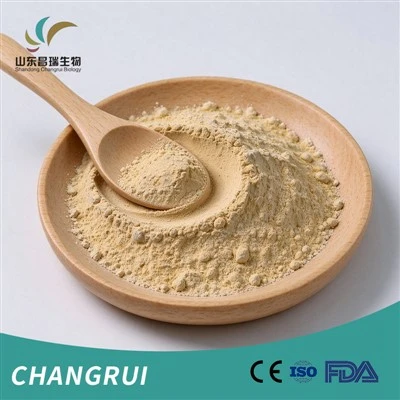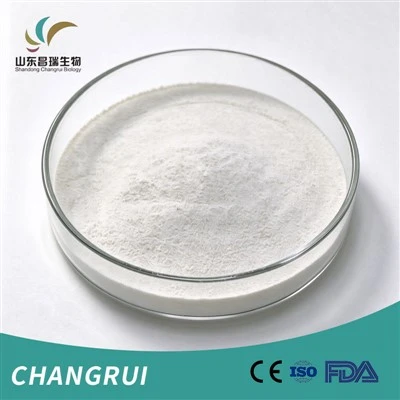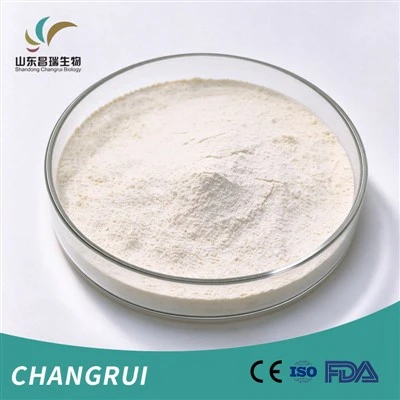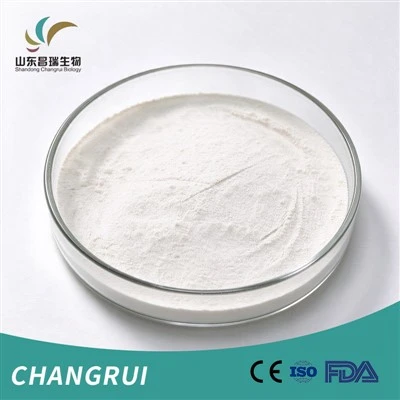
Shandong Changrui Biotech Co., Ltd. is one of the leading manufacturers and suppliers of food grade chitosan in China. Please feel free to wholesale bulk high purity food grade chitosan in stock here from our factory. All our raw materials are with high quality and competitive price. Contact us for pricelist.
Product Introduction
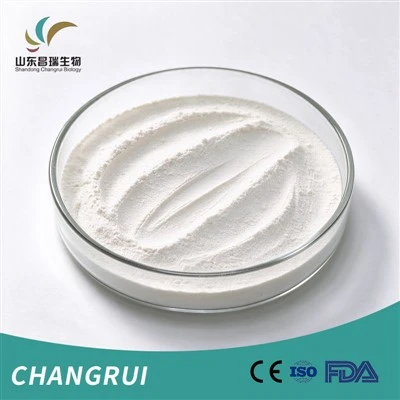
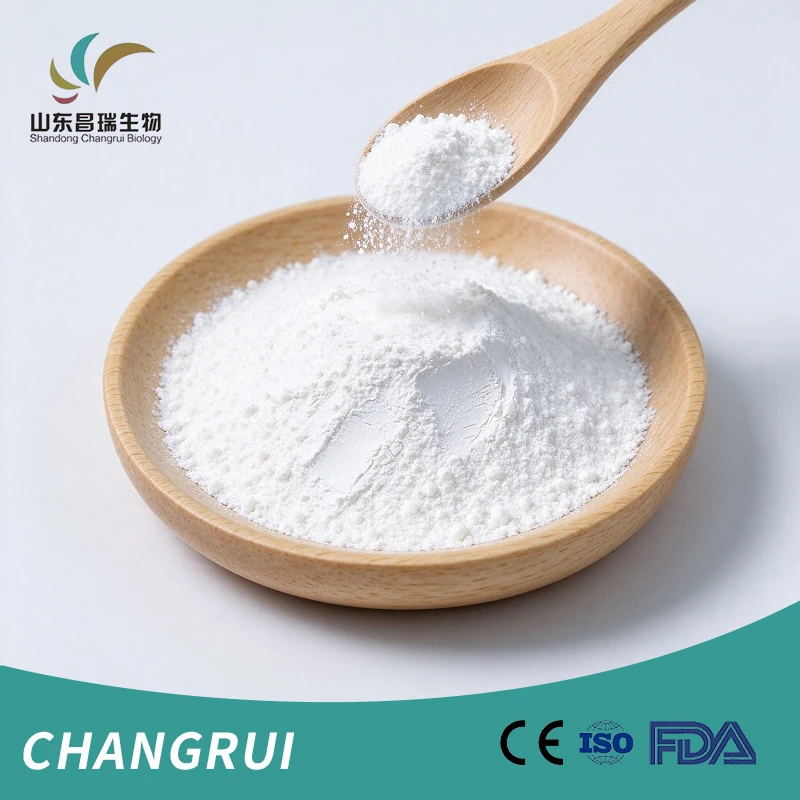
Food Grade Chitosan is a natural cationic polysaccharide derived from chitin through deacetylation, sourced from shrimp and crab shells. This product is a white to off-white powder with a deacetylation degree of ≥90%, soluble in dilute acid solutions, and offers excellent flocculation, antimicrobial, and film-forming preservation properties. It is widely used in beverage clarification, fruit and vegetable coating preservation, meat preservation, and health food applications. Its core value lies in being natural, safe, and biodegradable, helping food and beverage companies replace chemical preservatives and achieve clean label formulations while significantly improving product transparency and shelf life, making it a multifunctional natural food additive integrating preservation, clarification, and freshness retention.
Technical Specifications
|
Property |
Specification |
|
Appearance |
Off-white to white powder |
|
Deacetylation Degree |
90% min |
|
Viscosity (0.5% acetic acid, 20°C) |
20-500 mPa·s (customizable) |
|
Moisture |
10.0% max |
|
Ash |
1.0% max |
|
Insoluble Matter |
1.0% max |
|
pH (1% solution) |
7.0-9.0 |
|
Heavy Metals (as Pb) |
10 ppm max |
|
Arsenic (As) |
0.5 ppm max |
|
Total Plate Count |
1000 CFU/g max |
|
Mold & Yeast |
100 CFU/g max |
|
E. coli |
Negative |
|
Salmonella |
Negative |
Health Benefits & Values
Natural Clarifier for Beverage Production
This cationic polysaccharide captures suspended particles and colloids in juice, wine and tea, delivering clear beverages and extended shelf stability.
Clean-Label Antimicrobial Ingredient
Inhibits bacteria, fungi and yeast broadly, cutting usage of synthetic preservatives and supporting natural, clean-label food product claims.
Edible Coating for Fresh Produce Preservation
Forms a breathable moisture-locking film on fruits and vegetables, slowing spoilage, reducing cold-chain waste and enhancing product appearance.
Binds Heavy Metals and Toxins
Rich amino and hydroxyl groups adsorb heavy metals and mycotoxins, lowering hazardous impurities to improve safety in food and beverage formulations.
Multi-Functional Food Formulation Aid
Works as thickener and stabilizer to adjust texture, and optimizes powder flow for smoother tablet pressing and capsule filling.
Core Value in Formulation Development
Multifunctional Natural Solutio
Chitosan integrates flocculation, antimicrobial preservation, film-forming preservation, heavy metal chelation, and thickening stabilization in one ingredient, satisfying multiple formulation functions and simplifying formulation design.
Aligning with Clean Label Trend
As a natural, biodegradable food additive, chitosan can replace some synthetic preservatives and clarifying agents, helping brands shorten ingredient lists and achieve clean label formulations that meet consumer demand for natural and green foods.
Solubility and Formulation Guidanc
Chitosan is soluble in dilute acetic acid and hydrochloric acid but insoluble in water and alkaline solutions. Formulations should use acidic media for dissolution and avoid strong alkaline environments. The dissolved solution is colorless and transparent without impurities.
Compatibility with Common Food System Ingredients
Compatible with acidic food systems such as fruit juices, wines, and vinegar, as well as acidic ingredients like vitamin C and citric acid, without adverse interactions.
Stability Consideration
This product is hygroscopic and should be sealed and stored in a cool, dry, dark place to prevent caking. It is stable in acidic solutions and should avoid contact with strong bases. Prepare fresh or store refrigerated.
End-Application Scenarios
Beverage Clarification and Stabilization (Core Track)
Used in clarification and decolorization of fruit juices, wines, beers, tea beverages, and rice wine.
Fruit and Vegetable Coating Preservation
Used for surface coating preservation of apples, citrus, strawberries, and tomatoes to extend freshness and reduce transport losses.
Meat Preservation
Food Grade Chitosan Used for antimicrobial preservation and water retention in ham, sausage, and fresh meat. Chitosan inhibits pathogenic and spoilage bacteria, delays oxidative deterioration, and extends product shelf life.
Vinegar Anti-Sedimentation and Quality Improvement
Used for anti-sedimentation treatment and quality improvement of vinegar. Chitosan adsorbs unstable colloids and impurities, preventing sediment formation and improving clarity.
Health Foods and Functional Foods
It used in tablets, capsules, and meal replacement products. As a dietary fiber, chitosan helps adsorb fats, regulate gastrointestinal function, and enhance product functionality.
Application Advantages and Market Positioning
Natural Source and Safety
Derived from natural biological resources, compliant with global food additive regulations.
Competitive Advantage over Single-Function Additives
One ingredient covers multiple functions, reducing the need for separate additives.
Growing Market Demand for Clean Label
Rising consumer preference for natural and green foods continues to drive demand for chitosan as a natural food additive.
Customizable Technical Specifications
Deacetylation degree, viscosity, and particle size can all be customized to meet different food system requirements.
FAQ (Technical Q&A)
Q1: How should food grade chitosan be dissolved for production use?
A: Dissolve in 1%–2% acetic acid or hydrochloric acid solution with stirring until clear. Avoid strong alkali. Prepare fresh and use within a short time.
Q2: What concentration of chitosan solution is typically used for beverage clarification?
A: Prepare a 0.5%–1% chitosan stock solution, then add to the beverage at 0.1–0.5 g/L depending on turbidity. Conduct small-scale trials first.
Q3: Does chitosan affect the taste or aroma of beverages?
A: No. It is odorless and tasteless at recommended dosages. It does not alter the original flavor profile.
Q4: Can chitosan be used in beer clarification?
A: Yes. It is used to remove haze-forming proteins and polyphenols. Typical dosage: 0.2–1 g/L, depending on beer type and turbidity.
Q5: How is chitosan applied in meat preservation?
A: Dip or spray meat with 0.5%–1% chitosan solution. It inhibits spoilage bacteria and delays oxidation, extending shelf life.
Q6: Can chitosan be used in neutral pH foods?
A: Chitosan is insoluble at neutral pH. It must be pre-dissolved in dilute acid or used in acidic food systems. For neutral foods, chitosan derivatives may be required.
Q7: What is the difference between chitosan and chitin for food applications?
A: Chitosan is deacetylated and soluble in dilute acid, used for clarification and antimicrobial preservation. Chitin is highly insoluble and mainly used as a structural filler or dietary fiber.
Q8: Is chitosan stable during heat processing?
A: It is stable in acidic solutions at moderate temperatures. Prolonged heating above 80°C may cause degradation. Add after heat treatment when possible.
Q9: Can chitosan be combined with other hydrocolloids?
A: It may interact with anionic hydrocolloids such as pectin or carrageenan, causing precipitation. Compatibility testing is required before use.
Q10: How to prevent caking of chitosan powder during storage?
A: Store sealed in a cool, dry place. Keep production environment humidity below 50%. Reseal opened packages promptly.
Q11: What mesh size is recommended for food grade chitosan?
A: Standard ≥80 mesh. Finer grades (100–130 mesh) dissolve faster and are preferred for beverage clarification.
Q12: Can chitosan be used as a dietary fiber in supplements?
A: Yes. It acts as a soluble dietary fiber, helping adsorb fats and support gastrointestinal function. Typical dosage: 0.5–2 g per serving.
Hot Tags: food grade chitosan, China food grade chitosan manufacturers, suppliers, factory