Shandong Changrui Biotech Co., Ltd. is one of the leading manufacturers and suppliers of clothianidin technical in China. Please feel free to wholesale bulk high purity clothianidin technical in stock here from our factory. All our raw materials are with high quality and competitive price. Contact us for pricelist.
Product Introduction
As a systemic neonicotinoid agricultural insecticide, Clothianidin technical binds to insect nicotinic acetylcholine receptors and disrupts nerve impulse transmission. It is readily absorbed by crop roots and leaves with acropetal translocation in plant tissues. It provides potent control of piercing-sucking pests including aphids, whiteflies, thrips and planthoppers on grains, vegetables and fruit trees. As a core technical raw material for seed treatment, soil drench and foliar spray formulations, it helps growers suppress pest populations and reduce crop yield losses.
Technical Specifications
|
Property |
Specification |
|
Appearance |
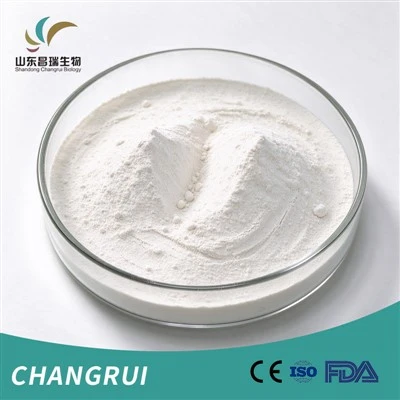
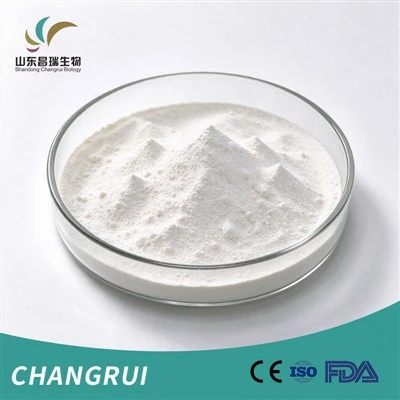
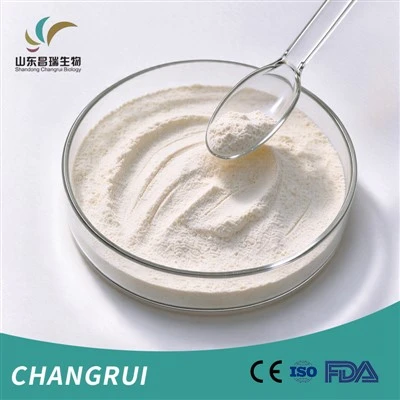
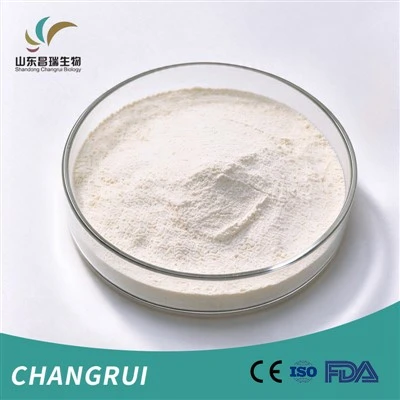
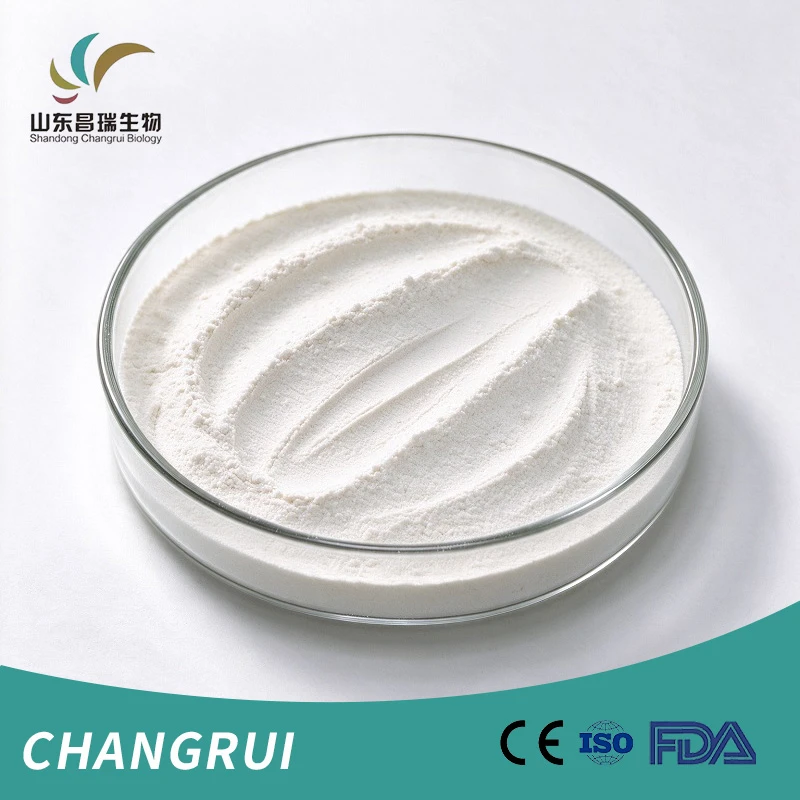
Off-white to white crystalline powder |
|
Active Ingredient Content |
≥98.0% |
|
Melting Point |
176.8℃ |
|
Moisture |
≤0.5% |
|
Acidity (as H₂SO₄) |
≤0.3% |
|
Insoluble Residue |
≤0.2% |
|
pH Range |
5.0–7.0 |
|
Solubility in Water |
0.327 g/L at 20°C |
|
Solubility in Organic Solvents |
Acetone 15.2 g/L; Methanol 6.26 g/L; Ethyl acetate 2.03 g/L; Dichloromethane 1.32 g/L (at 25°C) |
Health Benefits & Values
Nicotinic Acetylcholine Receptor Agonism for Insect Neurotoxicit
Acts as an agonist at insect nicotinic acetylcholine receptors (nAChR1 and nAChR2 subtypes), disrupting nerve signaling to paralyze and kill sap-feeding pests.
Efficient Systemic Acropetal Translocation
Absorbed by roots and foliage, moving upward through vascular tissues to protect newly grown plant parts.
Outstanding Long Residual Performance
Maintains stable bioactivity inside crops after application, delivering sustained defense against continuous pest invasion.
Broad Spectrum Against Piercing-Sucking Pests
Effectively controls aphids, whiteflies, planthoppers and thrips that damage crops via sap extraction.
High Purity Reduces Formulation Risk
Low impurity content lowers phytotoxicity risk and meets requirements for premium insecticide finished products.
Ecological Safety Consideration
Highly toxic to honey bees (contact LD₅₀ = 0.044 μg/bee; oral LD₅₀ = 0.0037 μg/bee). Toxic to aquatic invertebrates; low risk to fish and earthworms. Avoid application during flowering periods and near apiaries. Treated seeds must not be left accessible to birds or wildlife.
Extended Soil Persistence
Aerobic soil half-life ranges from 148 to 1,155 days (over 19 years in some soils). Residues can persist for at least 3 years after last application. Plan crop rotation carefully to avoid carryover to sensitive crops.
Core Value in Formulation Development
High-Purity Technical Reduces Formulation Hazards
The ≥98% high-purity Clothianidin technical adopts standardized purification process with low heavy metal and impurity content, lowering phytotoxicity risk and meeting requirements for premium insecticide finished products.
Formula Simplification for Sucking Pest Contro
Single active ingredient addresses piercing-sucking pests, reducing the need for multiple actives in finished formulations.
Multi-Dosage Form Process Adaptability
Suitable for wettable powder, water dispersible granule, suspension concentrate and seed coating formulations, matching seed dressing, soil irrigation and foliar spraying workflows.
Great Potential for Compound Formulation
Compatible with pyrethroids and insecticides of different modes of action. Combined formulas broaden pest spectrum and delay pest resistance development.
Consistent Storage Stability
Crystalline structure maintains good chemical stability under dry, shaded storage, resisting decomposition and preserving stable efficacy throughout finished product shelf life.
End-Application Scenarios
Piercing-Sucking Pest Control (Core Track)
Controls aphids, whiteflies, rice planthoppers, thrips and leafhoppers on rice, wheat, vegetables, citrus and ornamental crops.
Seed Treatment Formulations
Processed into seed coating and seed dressing agents for early-season pest protection.
Soil Drench Application
Applied in nurseries and greenhouse substrates for root uptake, offering long-duration protection against early foliar pests.
Compound Insecticide Development
Serves as core active ingredient for mixed insecticide formulations, combining with other actives to expand control spectrum and manage resistance risk.
High-Value Horticulture & Field Crop Protection
Widely used for fruits, vegetables and grain crops, providing dependable sucking pest control for large-scale commercial planting systems.
Application Advantages and Market Positioning
Seed Treatment Optimized Positioning
Excellent seed coating performance and stable seedling protection.
Unique Mode of Action for Resistance Rotation
Targets insect nicotinic receptors, suitable for rotation or compound use with non-neonicotinoid insecticides to slow pest resistance build-up.
Extended Residual Activity Reduces Spraying Frequency
Clothianidin technical delivers long-lasting protection, cutting application times and lowering labor costs for field and greenhouse growers.
Wide Adaptability for Field & Protected Crops
Features reliable crop safety at recommended rates, matching pest control demands of grain fields, greenhouses and commercial orchards.
FAQ (Technical Q&A)
Q1: How long does Clothianidin persist in soil, and what are the implications for crop rotation?
A: Clothianidin is extremely persistent in aerobic soil, with laboratory half-lives ranging from 148 to 1,155 days, and up to 6,931 days in some soils. EPA concluded that it is very likely to persist and accumulate from year to year after repeated uses. Field studies detected residues at least 3 years after last application. Plan crop rotation carefully, especially for crops sensitive to neonicotinoid residues.
Q2: What is the toxicity of Clothianidin to bees and other pollinators?
A: Clothianidin is highly toxic to honey bees. EPA hazard assessment shows contact LD₅₀ of 0.044 μg/bee and oral LD₅₀ of 0.0037 μg/bee. It is systemic and expressed in nectar and pollen of crops grown from treated seeds. Avoid application during flowering periods and near apiaries. Treated seeds must be fully incorporated into soil and not left accessible to birds or wildlife.
Q3: How does Clothianidin compare to Thiamethoxam and Imidacloprid?
A: All three are neonicotinoids. Clothianidin has the strongest seed treatment persistence among them and is the primary metabolite of Thiamethoxam. Thiamethoxam has faster systemic uptake and bidirectional translocation. Imidacloprid is first-generation with mainly upward translocation. Clothianidin and imidacloprid show comparable chronic toxicity to aquatic invertebrates.
Q4: Can Clothianidin be used for seed treatment on all crops?
A: Clothianidin is registered for seed treatment on rice, wheat, cotton, corn, potatoes, and vegetables. Follow local registration guidelines. In the EU, seed treatment is restricted for certain cereals sown from January to June. Treated seeds must not be used as food or feed.
Q5: What is the hydrolytic stability of Clothianidin?
A: Clothianidin is stable to hydrolysis at pH 4–7 and only degrades slowly at pH 9. Hydrolysis is not considered a significant degradation pathway under environmentally relevant conditions.
Q6: Does Clothianidin have any plant growth regulatory effects?
A: No. Unlike some triazole fungicides, Clothianidin is a neonicotinoid insecticide and does not exhibit plant growth regulatory activity. Its effects are limited to insect nervous system disruption.
Q7: How should Clothianidin be stored to maintain stability?
A: Store in a sealed container in a cool, dry, ventilated warehouse away from heat, direct sunlight, and fire sources. Clothianidin is stable for at least 2 years under proper storage conditions. Avoid mixing with alkaline substances.
Q8: Can Clothianidin be used in greenhouse vegetable production?
A: Yes. It is widely used for greenhouse seed treatment and soil drench to control whiteflies and aphids. However, because of its high toxicity to bees, avoid application during crop flowering. Ensure adequate ventilation and follow pre-harvest intervals.
Q9: What is the difference between Clothianidin Technical and Clothianidin finished formulations?
A: It is a raw material for pesticide manufacturers to produce finished formulations such as seed coating agents, WP, WDG, and SC. Finished formulations are ready-to-use products that require dilution before field application.
Q10: Does repeated use of Clothianidin easily trigger pest resistance?
A: Repeated solo application may induce resistance. Rotation or compounding with insecticides of different action mechanisms (such as pyrethroids or diamides) is strongly recommended to delay resistance development.
Hot Tags: clothianidin technical, China clothianidin technical manufacturers, suppliers, factory