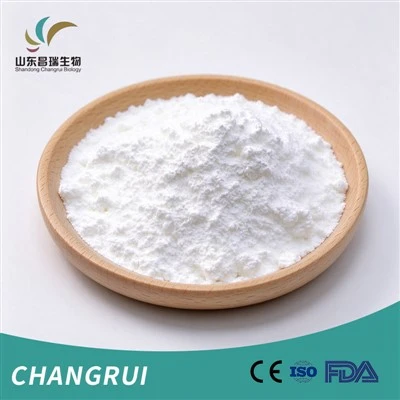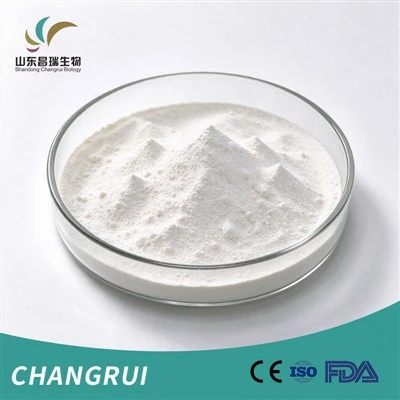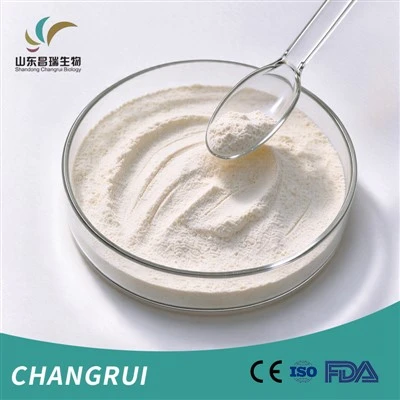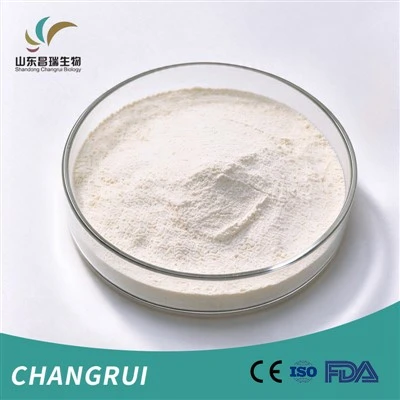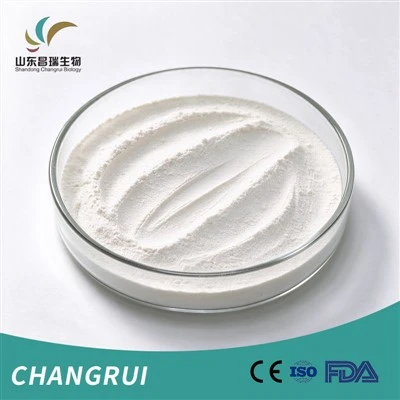
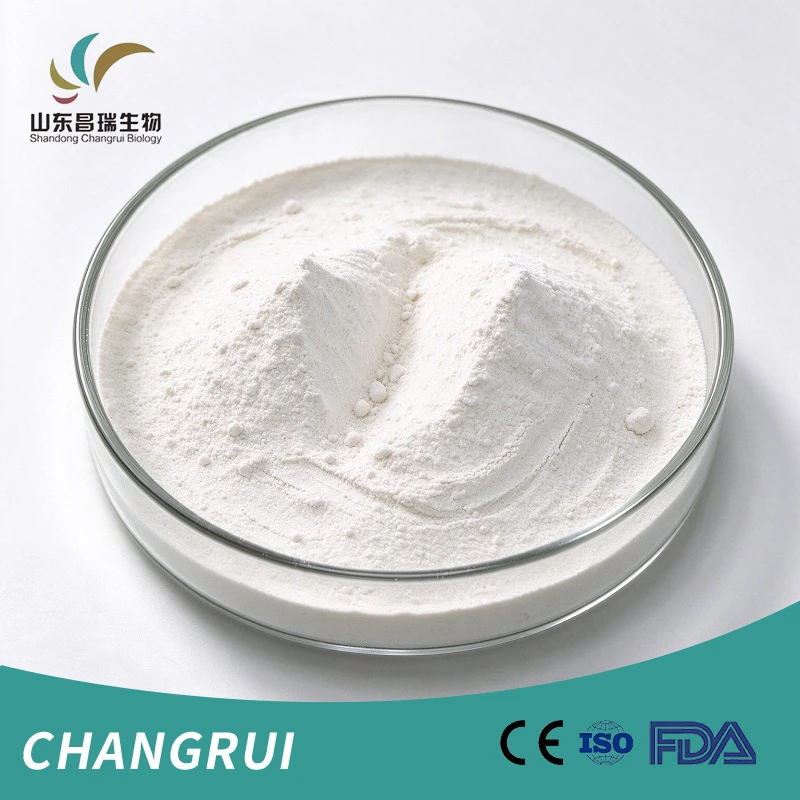
Shandong Changrui Biotech Co., Ltd. is one of the leading manufacturers and suppliers of bifenthrin powder in China. Please feel free to wholesale bulk high purity bifenthrin powder in stock here from our factory. All our raw materials are with high quality and competitive price. Contact us for pricelist.
Product Introduction
As a broad-spectrum synthetic pyrethroid agricultural insecticide, Bifenthrin Powder delivers contact and stomach poisoning activity against pests, with no systemic or fumigant effects. It disrupts sodium channel function in insect nerve membranes to achieve rapid knockdown and long residual control. It targets lepidoptera, homoptera, coleoptera pests and mites on fruits, vegetables, field crops and ornamental plants. As a core technical raw material for foliage spray and soil treatment formulations, it helps growers suppress pest populations and reduce crop losses caused by insect and mite damage.
Technical Specifications
|
Property |
Specification |
|
Appearance |
Off-white to white crystalline powder |
|
Active Ingredient Content |
≥96.0% |
|
Melting Point |
68℃–70.6℃ |
|
Moisture |
≤1.0% |
|
Acidity (as H₂SO₄) |
≤0.3% |
|
Acetone Insoluble Residu |
≤0.3% |
|
pH Range |
5.0–9.0 |
|
Volatile Impurities |
Compliant with industrial technical standards |
|
Solubility in Water |
Practically insoluble, < 0.1 mg/L at 20°C |
|
Solubility in Organic Solvents |
Soluble in toluene, acetone, chloroform, dichloromethane |
Health Benefits & Values
Voltage-Gated Sodium Channel Interference for Fast Knockdown
Interferes with voltage-gated sodium channel gating kinetics, causing hyperexcitation and rapid knockdown of target pests upon contact or ingestion.
Broad Insecticidal and Acaricidal Spectrum
Controls a broad spectrum of foliar insects including Lepidoptera, Homoptera, Hemiptera, Coleoptera, and Thysanoptera, with suppressive activity against phytophagous mites, simplifying pest management for mixed pest pressure scenarios.
Long-Lasting Residual Surface Activity
Stable on plant surfaces after application, providing extended protection against re-invading pests with good weather resistance.
Non-Systemic with Surface Penetration
Works via contact and stomach action without plant translocation; moderate leaf penetration reaches pests hiding on leaf undersides.
High Purity Reduces Formulation Risks
Low impurity content lowers phytotoxicity risk and meets requirements for premium insecticide finished products.
Ecological Safety Considerations
Highly toxic to bees, fish, and silkworms. Avoid application during flowering periods and near water bodies, apiaries, and mulberry fields.
Core Value in Formulation Development
High-Quality Technical Reduces Formulation Risks
The ≥96% purity Bifenthrin Powder adopts standardized purification process with low impurity content, lowering phytotoxicity risk and meeting requirements for premium insecticide finished products.
Formula Simplification for Mixed Pest Pressur
Single active ingredient addresses both insect and mite pressure, reducing the need for multiple active ingredients in finished formulations.
Multi-Dosage Form Process Adaptability
Reference temperature environment:30℃
Operating ambient temperature:(average daily temperature ≤ +35℃) -35~+70c
Please pay attention to safety when using,wait until the power is turned on to warm up before operation
Broad Compatibility with Partner Insecticides
Compatible with neonicotinoids, diamides, and other insecticides for compound formulation development.
Reliable Storage Stability
Crystalline structure maintains good chemical stability under cool and shaded storage, resisting decomposition and keeping consistent efficacy throughout finished product shelf life.
End-Application Scenarios
Foliage Pest & Mite Control (Core Track)
Controls aphids, whiteflies, leafhoppers, caterpillars, thrips and spider mites on vegetables, citrus, cotton, grapes and ornamental crops.
Soil Pest Treatment
Used for soil application to suppress underground pests and termites, suitable for nursery and construction anti-termite treatment.
Foliar Spray Formulations
Processed into EC, SC and WP for field and greenhouse spray applications to reduce pest feeding damage on crop leaves and fruits.
Compound Insecticide Development
Serves as core active ingredient for mixed insecticide formulations, combining with other actives to expand control spectrum and manage resistance.
Ornamental & High-Value Crop Protection
Widely applied for flowers, fruit trees and tea crops, delivering long-duration pest and mite control for high-value commercial planting systems.
Application Advantages and Market Positioning
Dual Insecticide & Acaricide Differentiated Positioning
Different from single-function insecticides, Bifenthrin Powder controls both insects and mites, bringing unique advantages for fields with co-occurrence of pests and mites.
Rapid Knockdown plus Extended Residual Effect
Combines fast pest knockdown and long residual activity, outperforming many short-acting contact pesticides and improving end-user field efficiency.
Resistance Management Positioning
Suitable for rotation or tank-mix programs with non-pyrethroid pesticides to slow pest resistance development.
Wide Adaptability for Field & Greenhouse Crops
Features reliable crop safety at recommended rates, matching the pest control demands of large-scale field agriculture and protected horticulture.
FAQ (Technical Q&A)
Q1: How does Bifenthrin differ from other pyrethroids like cypermethrin or deltamethrin?
A: Bifenthrin is a Type I pyrethroid lacking the α-cyano group, which gives it a distinct mixed Type I/II mode of action. It has stronger acaricidal (mite) activity compared to most other pyrethroids and a longer residual effect on plant surfaces.
Q2: What is the residual activity of Bifenthrin on plant surfaces?
A: Residual activity typically lasts 8–12 weeks on plant surfaces under field conditions, depending on application rate, UV exposure, and rainfall. This long residual makes it suitable for crops requiring extended pest protection.
Q3: Is Bifenthrin toxic to bees and beneficial insects?
A: Yes. Bifenthrin is highly toxic to bees and has a high risk to natural enemies such as Trichogramma. Avoid application during flowering periods and near apiaries. It should be integrated into IPM programs with careful timing.
Q4: Can Bifenthrin be used for soil pest control?
A: Yes. Bifenthrin is effective against termites and some soil-dwelling pests when applied as a soil treatment. It is commonly used for nursery and construction anti-termite treatment.
Q5: How does Bifenthrin compare to metalaxyl or other fungicides in crop protection programs?
A: Bifenthrin is a pyrethroid insecticide/acaricide targeting insects and mites. It has no fungicidal activity. Metalaxyl is a systemic fungicide for oomycete diseases. They can be used in separate spray programs for integrated pest and disease management, but not as substitutes for each other.
Q6: What is the optimal pH range for tank-mixing Bifenthrin with other agrochemicals?
A: Bifenthrin is stable under neutral and weakly acidic conditions. Avoid mixing with strongly alkaline pesticides (pH > 8) to prevent decomposition and efficacy loss. A small-scale jar test is recommended before large-volume mixing.
Q7: Does Bifenthrin have systemic activity in plants?
A: No. Bifenthrin is a contact and stomach poison with no systemic translocation. It has moderate leaf penetration that can reach pests on leaf undersides, but it does not move from treated leaves to new growth.
Q8: How should Bifenthrin be stored to maintain stability?
A: Store in a sealed container in a cool, dry, ventilated warehouse away from heat, direct sunlight, and fire sources. Bifenthrin Powder is stable for at least 2 years under proper storage conditions.
Q9: Can Bifenthrin be used in greenhouse vegetable production?
A: Yes. It is widely used for greenhouse foliar spray to control leaf pests and spider mites. However, because of its high toxicity to bees, avoid application during crop flowering. Ensure adequate ventilation and follow pre-harvest intervals.
Q10: What is the key difference between Bifenthrin Technical and Bifenthrin finished formulations?
A: Bifenthrin Technical is a raw material for pesticide manufacturers to produce finished formulations such as EC, SC, and WP. Finished formulations are ready-to-use products that only require water dilution before field application.
Hot Tags: bifenthrin powder, China bifenthrin powder manufacturers, suppliers, factory