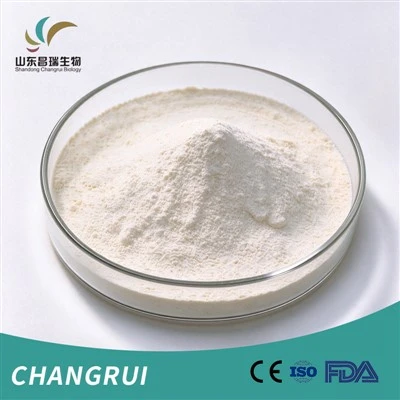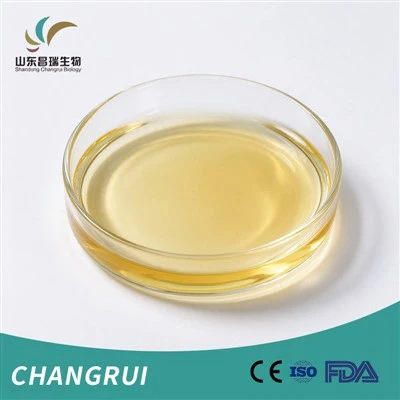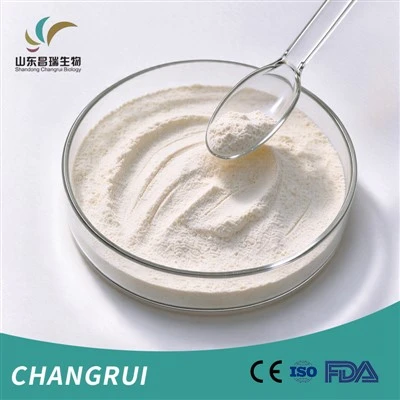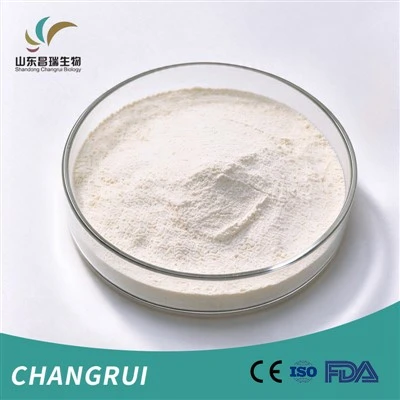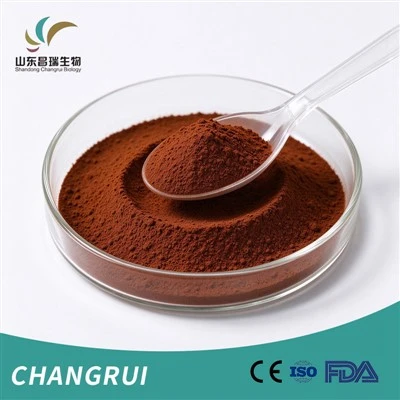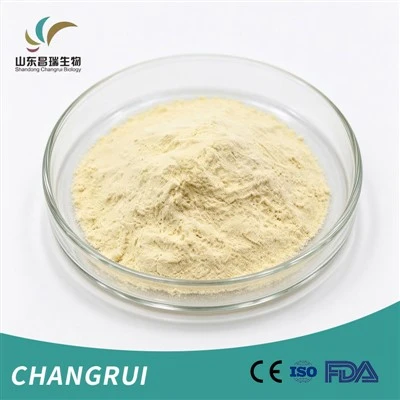
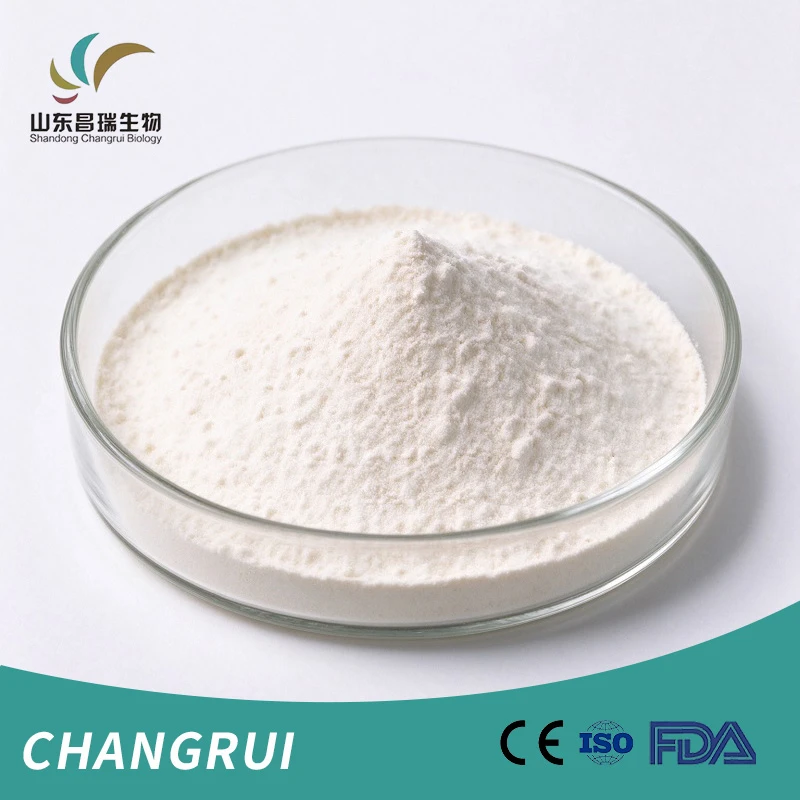
Shandong Changrui Biotech Co., Ltd. is one of the leading manufacturers and suppliers of alginic acid powder in China. Please feel free to wholesale bulk high purity alginic acid powder in stock here from our factory. All our raw materials are with high quality and competitive price. Contact us for pricelist.
Product Introduction
Alginic Acid Powder is extracted from brown seaweed and refined into high-molecular-weight alginate polysaccharide. It functions as a natural bio-stimulant and soil conditioning component, regulating rhizosphere environment, stimulating root growth and improving crop stress tolerance. It chelates mineral nutrients to enhance nutrient availability and protects root cells from abiotic damage. As a core seaweed raw material for agro-formulations, it assists crops in resisting adverse environments, promotes balanced growth and improves produce quality in diversified planting systems.
Technical Specifications
|
Property |
Specification |
|
Appearance |
Off-white to light tan fine powder |
|
Alginic Acid |
≥60.0% |
|
Water Solubility |
Insoluble in cold water; slightly soluble in hot water; soluble in alkaline solutions |
|
pH (1% Aqueous Solution) |
5.5–7.5 (Neutralized Grade; Raw Alginic Acid: 2.0–3.4 at 3%) |
|
Insoluble Residue |
≤1.0% |
|
Executive Standard |
HG/T 5050-2016 / NY/T 3831-2021 (Depends on Registration Category) |
|
Toxic Harmful Substances |
Compliant with GB 38400-2019 |
Health Benefits & Values
Natural Rhizosphere Protective Film Formation
Alginates undergo rapid ion exchange with calcium in soil to form a thermally irreversible gel layer around root surfaces, locking moisture, buffering salt ion impact, and stimulating root development.
Chelate Mineral Nutrients for Improved Availability
Combines with calcium, magnesium and trace elements to reduce nutrient fixation, boosting nutrient uptake by crop roots.
Stimulate Root Growth & Root Hair Multiplication
Polysaccharide bioactive components activate root meristem, promote fibrous root development and expand root absorption area.
Enhance Crop Abiotic Stress Resistance
Strengthens tolerance against drought, salinity and low temperature, mitigating physiological damage caused by adverse growing conditions.
Improve Soil Aggregate Structure
Facilitates soil particle aggregation, alleviates soil compaction and raises soil water retention and air permeability.
Overdose Risk Awareness
Excessive application may lead to gel accumulation in soil, reducing permeability and air exchange. Over-gelation may encapsulate root systems and hinder nutrient uptake. Follow recommended dosages strictly.
Core Value in Formulation Development
High-Molecular Seaweed Polysaccharide Base Materia
Retains natural high-molecular alginic acid structure for bio-stimulation and soil conditioning.
Flexible Formula Matching
Alginic Acid Powder can be compounded with amino acids, polyglutamic acid, macro/medium/trace elements and brown algae oligosaccharide for composite agro products.
Versatile Formulation Processing
Suitable for powder fertilizer, granule fertilizer and liquid fertilizer production after alkali neutralization treatment.
Good Compatibility With Neutral Agro Inputs
Compatible with most neutral water-soluble fertilizers and agro-biostimulants; avoid direct mixing with strong acid.
Stable Structural Performance
Consistent polysaccharide characteristics under proper storage, maintaining gel-forming and bioactive properties.
End-Application Scenarios
Rhizosphere Protection & Soil Conditioning (Core Track)
Applied in orchards and greenhouses for rhizosphere management.
Seedling Root Promotion & Transplant Stress Relief
Used during seedling transplanting to stimulate new root growth and lower transplant shock risk.
Compound Seaweed Biostimulant Development
Serves as core seaweed raw material to manufacture seaweed series agricultural biological agents and functional fertilizers.
Drought & Salt Stress Mitigation
Drip application before stress periods to improve crop survival under saline and drought conditions.
High-Value Crop Quality Promotion
Widely used for fruit trees, berries and vegetables to improve fruit appearance and commercial quality.
Application Advantages and Market Positioning
High-Molecular Seaweed Polysaccharide Positioning
Focuses on gel formation, nutrient chelation, and soil structure improvement.
Dual Functions of Root Protection & Soil Conditioning
Combines root zone protection with soil conditioning for comprehensive rhizosphere management.
Natural Nutrient Chelating Capacity
Reduces nutrient immobilization in soil and improves utilization efficiency of mineral elements.
Wide Adaptability Across Crop Systems
Alginic Acid Powder suitable for fruit trees, greenhouse vegetables, field crops and seedlings, compatible with fertigation and root drench application.
FAQ (Technical Q&A)
Q1: How does this product differ from Brown Algae Oligosaccharide?
A: Brown Algae Oligosaccharide is a low-molecular fragment that acts mainly as a plant elicitor to trigger crop immunity. This product is a high-molecular polysaccharide, with strengths in gel film formation, nutrient chelation, and soil aggregate improvement. Both belong to agricultural biological agents, seaweed category.
Q2: What is the optimal application rate and method for this product?
A: After alkali neutralization, dilute 500–800 times for root drenching and drip irrigation. Apply 3–5 kg per mu per application. For foliar application, dilute 1000–1500 times. Adjust based on crop type and soil conditions.
Q3: What are the symptoms of alginic acid overdose, and how to avoid it?
A: Overdose may lead to gel accumulation in soil, reducing permeability and air exchange. Over-gelation may encapsulate root systems and hinder nutrient uptake. Follow recommended dosages strictly and avoid continuous over-application.
Q4: What are the key quality indicators to check when sourcing alginic acid products?
A: Check alginic acid content (≥60.0%), water solubility (soluble in alkaline solution), pH range, and compliance with GB 38400-2019 for heavy metal limits. The product should also carry a valid fertilizer registration certificate for organic water-soluble fertilizer category.
Q5: Can it be tank-mixed with microbial inoculant fertilizer?
A: Alternate application is recommended. Its gel matrix can provide a stable rhizosphere environment for beneficial microbes. Apply together for synergistic soil improvement.
Q6: What is the difference between alginic acid and seaweed extract?
A: Seaweed extract contains mixed macromolecular alginate, multiple nutrients, and plant growth hormones. Alginic acid is a refined high-molecular polysaccharide with concentrated gel-forming and nutrient-chelating properties. It is a more targeted functional ingredient for rhizosphere protection and soil conditioning.
Q7: What are the storage requirements for this product?
A: Store sealed in a cool, dry, ventilated warehouse away from high temperature and strong sunlight to prevent polysaccharide degradation. Shelf life is typically 2 years under proper conditions.
Q8: What crops have shown the best response to alginic acid application?
A: Field trials show strong responses on fruit trees, vegetables, and cash crops. It is particularly effective for rhizosphere protection under salt stress and for improving soil aggregate structure in degraded soils.
Q9: Can it be used in organic agriculture?
A: Yes, qualified grades meet requirements for organic planting programs subject to local organic certification standards. Check with local certifiers for approval status.
Q10: What is the core market positioning of Alginic Acid Powder?
A: As a type II seaweed-derived agricultural biological agent raw material, it provides high-molecular alginic acid polysaccharide for agro-formulation. With the capacity to form root protective gel film and improve soil environment, it acts as a foundational seaweed base material for developing seaweed biostimulants and functional fertilizer products.
Hot Tags: alginic acid powder, China alginic acid powder manufacturers, suppliers, factory