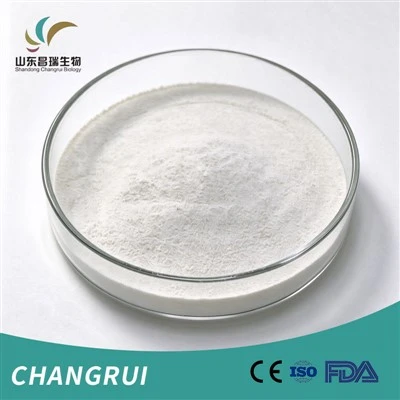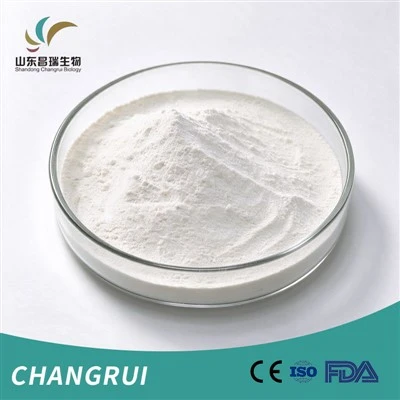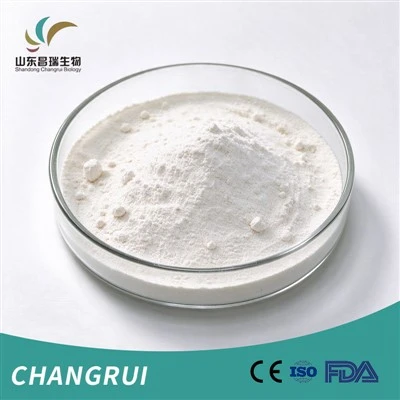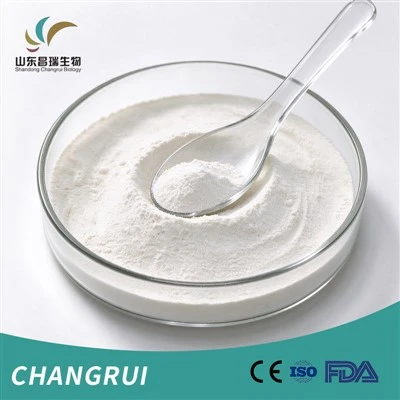
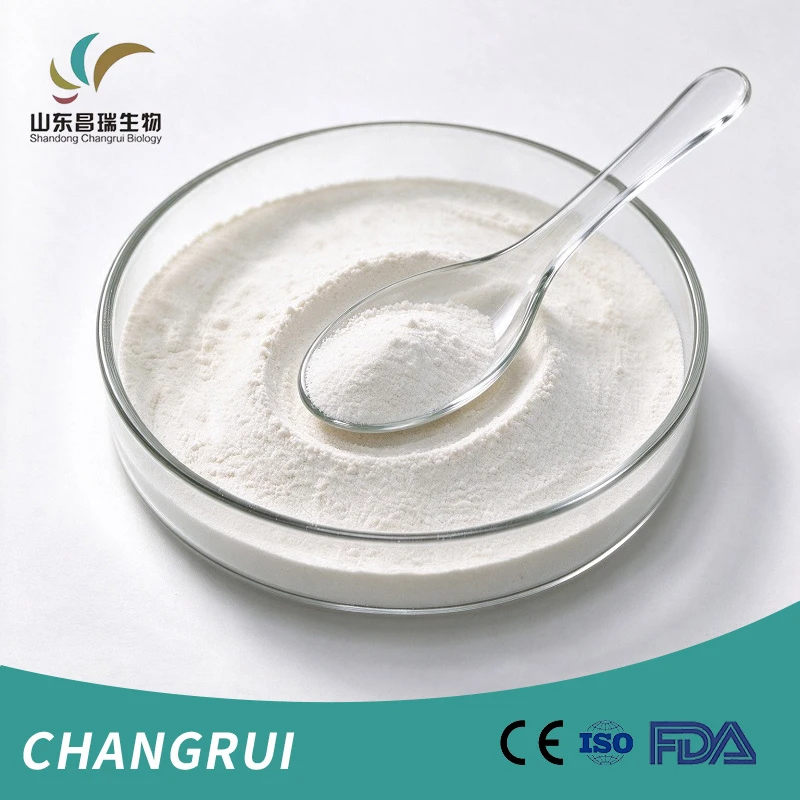
Shandong Changrui Biotech Co., Ltd. is one of the leading manufacturers and suppliers of inositol peptide in China. Please feel free to wholesale bulk high purity inositol peptide in stock here from our factory. All our raw materials are with high quality and competitive price. Contact us for pricelist.
Product Introduction
Inositol Peptide is high-activity inositol-peptide conjugate derived from natural inositol. It acts as plant metabolic signal regulator, boosting key enzyme activity for nitrogen assimilation, optimizing cell osmotic balance and enhancing antioxidant defense. It promotes root development, improves uptake of nitrogen, phosphorus and trace minerals, and alleviates abiotic stress including salinity and drought. It also chelates soil nutrients and optimizes rhizosphere microbial habitat. As a core bioactive raw material for agro-formulations, it increases biomass accumulation, improves yield and upgrades fruit quality for field crops, fruits and vegetables.
Technical Specifications
|
Property |
Specification |
|
Appearance |
Off-white to light beige fine powder |
|
Water Solubility |
100% soluble in water at room temperature (pH 5.0–7.0) |
|
pH (1% Aqueous Solution) |
5.0–7.0 |
|
Insoluble Residue |
≤0.5% |
|
Executive Standard |
Enterprise Standard |
|
Reference Standard |
NY/T 1345-2007 (Inositol Determination) |
|
Heavy Metals |
Compliant with applicable fertilizer/pesticide technical standards |
Health Benefits & Values
Accelerate Nitrogen Assimilation & Reduce Ammonia Toxicity
Upregulates GS and GOGAT enzyme activity, speeds up ammonium conversion inside plant cells, avoids ammonia accumulation injury and boosts biomass buildup.
Enhance Antioxidant & Abiotic Stress Tolerance
Modulates cell osmotic pressure, scavenges reactive oxygen species, mitigates damage from salt, drought and low temperature stress.
Stimulate Root Growth & Nutrient Uptake
Promotes root cell elongation and root hair proliferation, improves absorption efficiency of N, P, Zn and other mineral nutrients.
Chelate Nutrients & Optimize Rhizosphere Microecology
Possesses strong chelating capacity to reduce nutrient fixation and leaching; supplies favorable substrate to multiply beneficial soil microbes.
Improve Photosynthesis & Reproductive Growth
Stabilizes photosynthetic function, coordinates vegetative and reproductive growth, elevates fruit soluble solids and commercial quality.
Ecological Safety Considerations
Derived from inositol and peptide precursors, generally considered environmentally friendly. No acute toxicity data currently available for the conjugate. Follow standard agricultural chemical handling precautions and wear appropriate protective equipment.
Overdose Risk Awarenes
Effective working concentration is only 1/30 of pure inositol. Overdose may over-stimulate nitrogen metabolism, causing excessive vegetative growth and disrupting reproductive balance. Follow recommended dosages strictly.
Core Value in Formulation Development
High-Activity Inositol-Peptide Plant Regulator Base Materia
Integrates crop metabolic regulation and rhizosphere synergistic improvement.
Flexible Formula Matching
Compatible with amino acids, brown algae oligosaccharide, alginic acid, DA-6, sodium nitrophenolate and mineral nutrient raw materials.
Excellent Water Solubility
Fast and complete dissolution, suitable for seed soaking, foliar spray, drip irrigation and root drenching production processes.
Good Compatibility With Neutral Agro Inputs
Inositol Peptide works well with most neutral water-soluble fertilizers and biostimulants; avoid mixing with strong alkaline products.
Fully Biodegradable
Degrades into inositol and amino acid monomers in soil, leaving no persistent residues, suitable for green agro formulations.
End-Application Scenarios
Crop Metabolism Activation & Fertilizer Synergy (Core Track)
Applied to grain crops, fruit trees, and vegetables for metabolism activation and fertilizer synergy.
Seed Treatment & Seedling Cultivation
Used for seed soaking to activate seed metabolism, raise germination energy and cultivate robust seedlings with well-developed roots.
Transplant Shock Relief & Root Zone Optimization
Foliar spray or root drench after transplanting to stimulate new root growth and enrich rhizosphere beneficial microbial population.
Compound Functional Agro Product Development
Serves as core plant regulator raw material for manufacturing biostimulants, compound foliar fertilizers and rhizosphere conditioning products.
Orchard Fruit Quality Promotion
Applied at flowering and fruit expansion stages for fruit quality improvement.
Application Advantages and Market Positioning
Inositol-Peptide Conjugate Differentiation
Different from ordinary nutrition raw materials, Inositol Peptide belongs to agricultural biological agent (plant regulator), featuring dual value of crop metabolic regulation and rhizosphere optimization.
Synergistic Effect on Nitrogen Metabolism
Improves nitrogen fertilizer utilization efficiency through enhanced ammonium assimilation.
Dual Functions of Crop Regulation & Rhizosphere Nourishment
Combines plant physiological regulation with soil microenvironment improvement.
Wide Adaptability Across Crop Systems
Suitable for fruit trees, greenhouse vegetables, field grain crops and seedlings, compatible with seed soaking, foliar spray and fertigation.
FAQ (Technical Q&A)
Q1: How does this product differ from Diethyl Aminoethyl Hexanoate (DA-6)?
A: DA-6 mainly enhances chlorophyll synthesis and balances endogenous hormones. This product excels at nitrogen assimilation acceleration, nutrient chelation, and rhizosphere microbial activation. Both are agricultural biological agents (plant regulators).
Q2: What is the optimal application rate and method for different crops?
A: For foliar spray, use 10–30 mg/L dilution. For root drenching, use 15–30 g per mu. For seed soaking, dilute 5–15 mg/L. Apply at early growth stages, flowering, and fruit-setting periods. Adjust based on crop type and growth stage.
Q3: What are the symptoms of overdose, and how to avoid it?
A: Overdose may over-stimulate nitrogen metabolism, causing excessive vegetative growth and disrupting reproductive balance. Follow recommended dosages strictly and avoid continuous over-application.
Q4: What is the registration requirement for this product in China?
A: it is currently used as a component in plant growth regulator compositions (e.g., combined with NATCA). It does not have a standalone pesticide registration in China. Verify the registration status of your specific product formulation.
Q5: Can it be tank-mixed with microbial inoculant fertilizer?
A: Highly recommended for combined use. It can provide carbon substrate to support colonization of beneficial microbes and amplify rhizosphere benefits. Apply together for synergistic soil improvement.
Q6: What are the key quality indicators to check when sourcing this product?
A: Check Inositol Peptide content (≥98.0%), water solubility, pH range, and compliance with enterprise standards. The product should also carry a valid quality certificate. Reference standard NY/T 1345-2007 for inositol determination.
Q7: What are the storage requirements for this product?
A: Store sealed in a cool, dry, ventilated warehouse away from high temperature and strong sunlight to preserve bioactivity. Shelf life is typically 2 years under proper conditions.
Q8: What crops have shown the best response to this product application?
A: Field trials show strong responses on cotton, grain crops, vegetables, and fruit trees. It is particularly effective for improving nitrogen use efficiency and alleviating salt/drought stress.
Q9: Can it be used in organic agriculture?
A: It depends on local organic certification standards. Derived from inositol and peptide precursors, it may be eligible for organic programs. Check with local certifiers for approval status.
Q10: What is the core market positioning of Inositol Peptide?
A: As a type II plant regulator raw material under agricultural biological agents, it delivers inositol-peptide conjugate active ingredients for seed treatment, foliar feeding, and fertigation. With the capacity to optimize nitrogen assimilation and activate rhizosphere vitality it acts as a premium base material for developing compound biostimulant and plant regulator agro products.
Hot Tags: inositol peptide, China inositol peptide manufacturers, suppliers, factory